
Learn to make beautiful Prints .
Start your Print Making Journey Here
Printmaking
Discover the wonderful medium of Print and how you can bring your ideas to life.
Etching
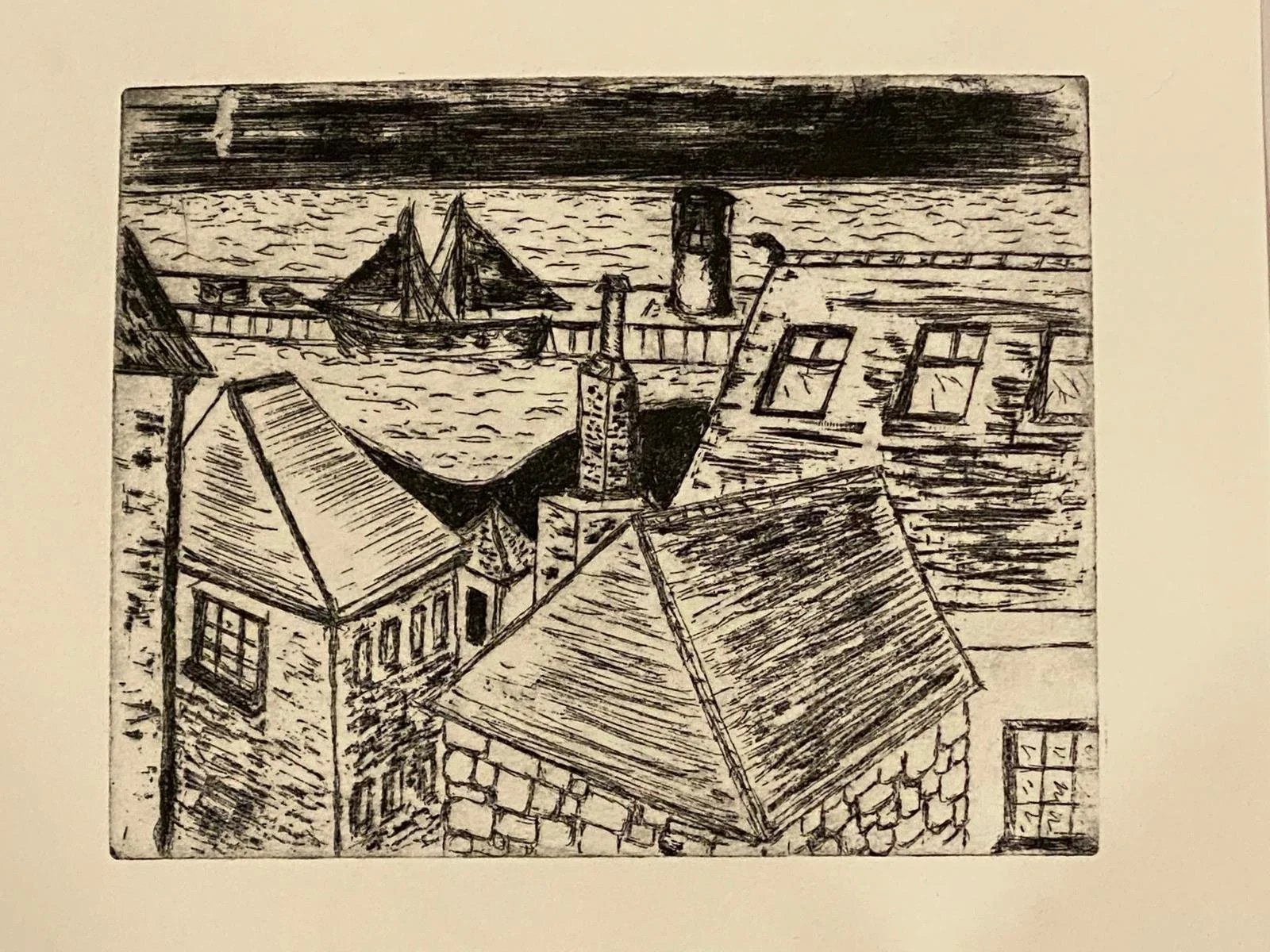
Whether you are a complete beginner or a seasoned artist looking to expand your technical repertoire, our etching courses provide a hands-on deep dive into this atmospheric medium. You will master the balance of delicate line work and bold textures through the following stages:
Plate Preparation: Learn how to file, degrease and apply the “ground” to the metal plate to ensure a professional finish.
Hard & Soft Ground Techniques: Discover how to create crisp, fine lines with hard ground, or use soft ground to capture organic textures like fabric, leaves, or pencil-like strokes.
The Chemistry : Understand how timing and acid concentrations affect the depth and darkness of your lines.
“Faux” Aquatint & Tonal Gradients: Master the art of creating tonal washes and shadows (rather than just lines) using a “stop out” bicarbonate soda, a ground and controlled acid exposure.
Inking & Wiping: Learn the process of applying ink and carefully wiping the surface so only the etched lines remain and the required depth of tone is achieved.
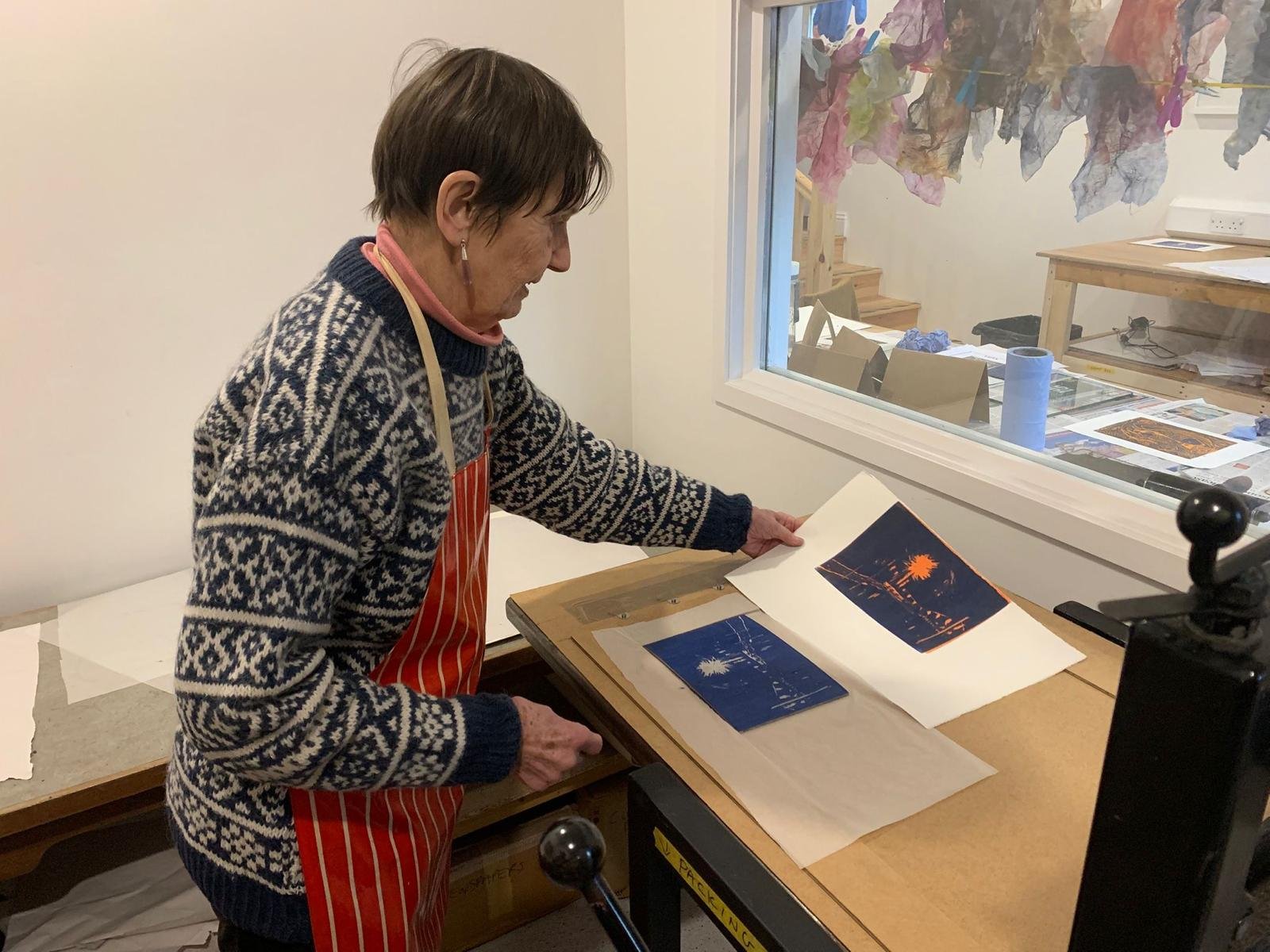
Operating the Press: Gain confidence using a high-pressure press using specialist inks and paper.
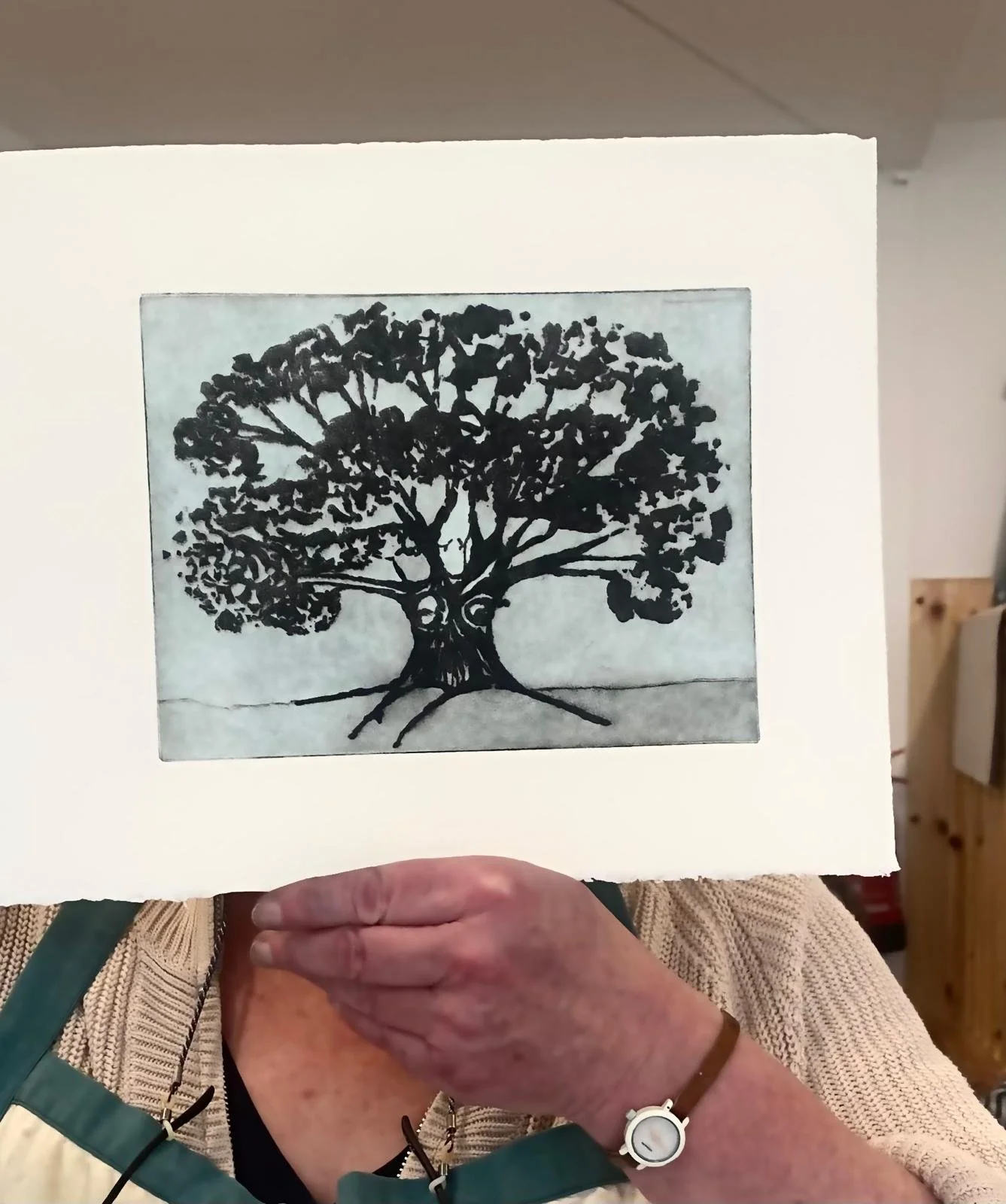
Why choose Etching? It offers a level of detail and "sketch-like" freedom that other print processes can't match. It’s perfect for artists who love drawing and want to see their work transformed by the unique, velvety texture of pressed ink.
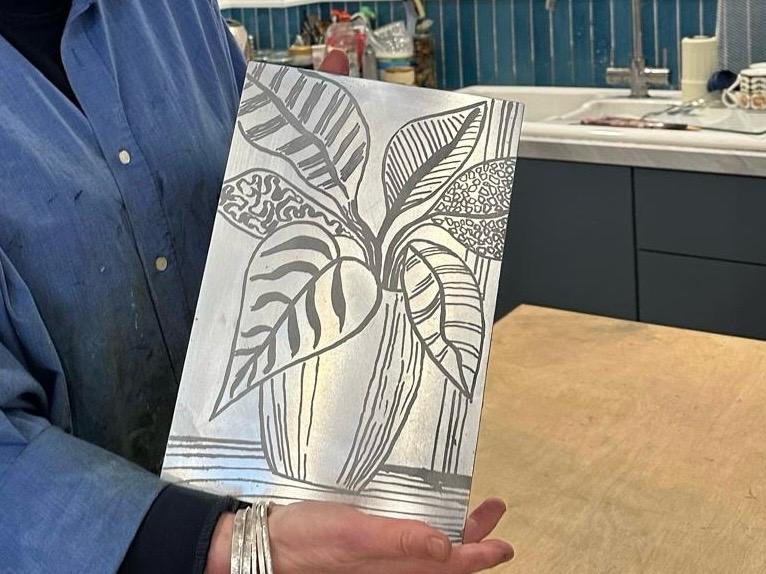
Etching, also known as Intaglio. Unlike relief printing (like linocut) where you ink the surface, etching involves incising a design into a metal plate—traditionally copper, zinc, or Aluminium—so that the "grooves” hold the ink.
The artist coats the plate in an acid-resistant waxy substance known as the “ground”.
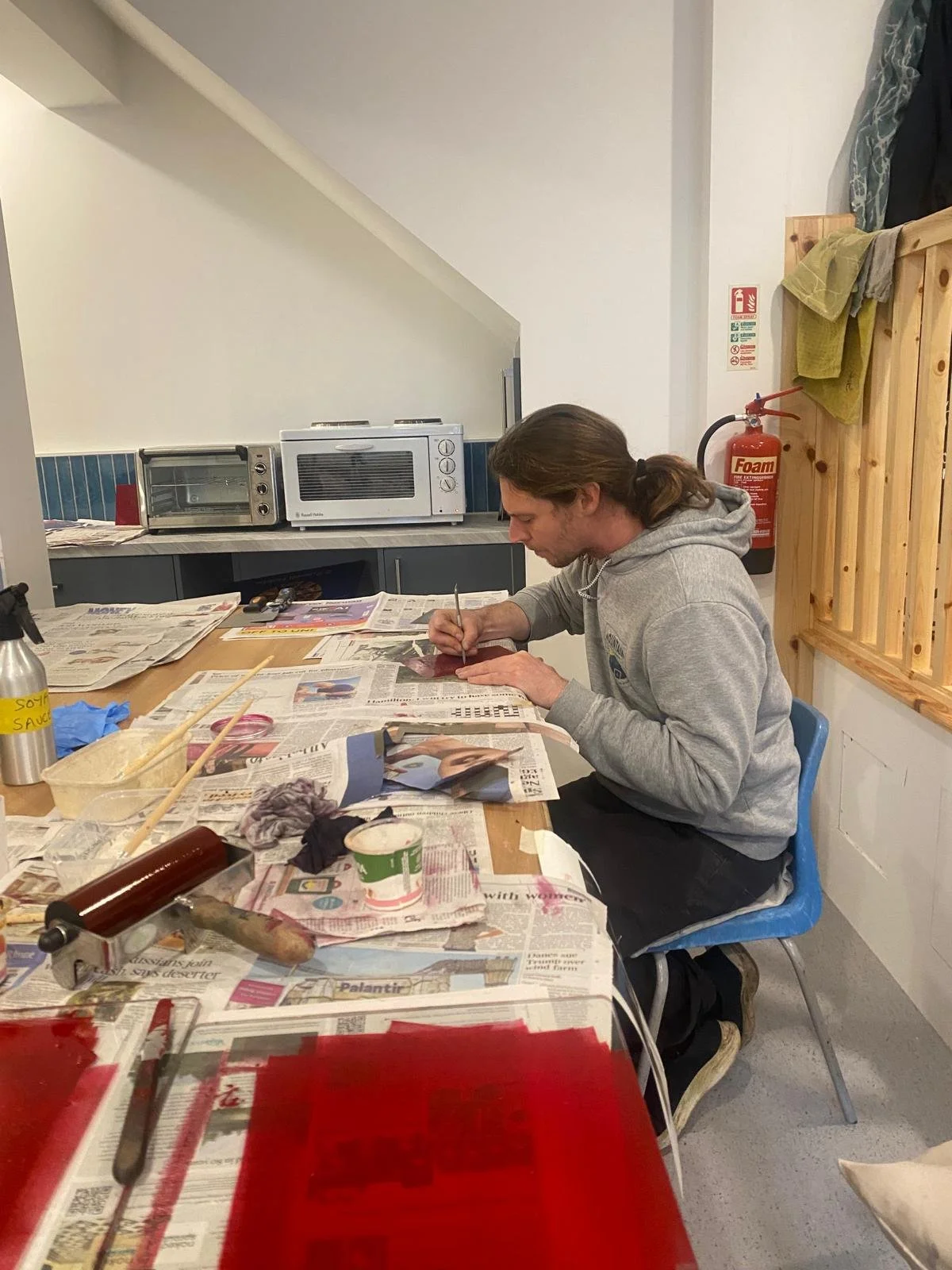
You draw your design through this ground with a needle, exposing the metal underneath.
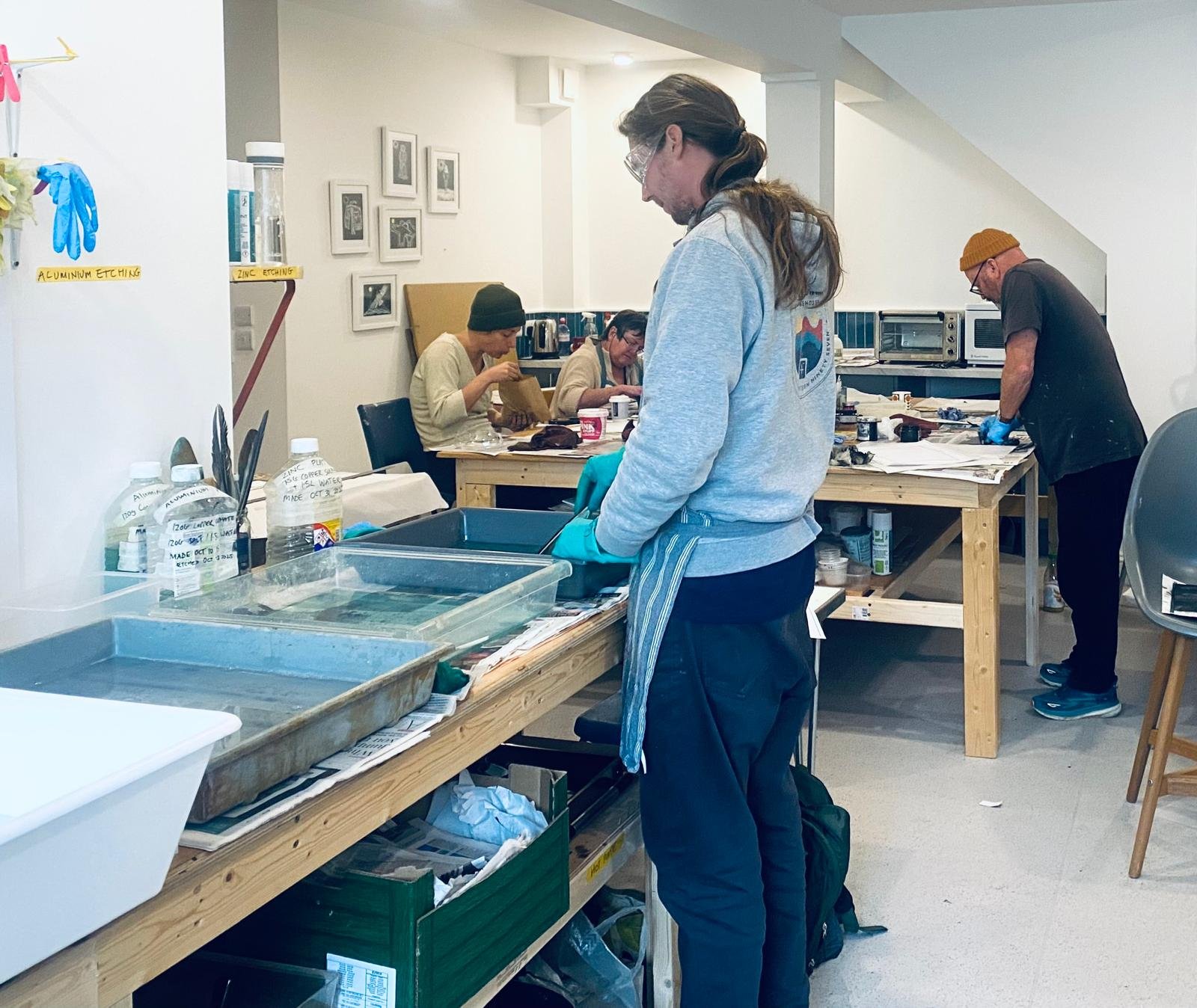
When the plate is submerged in an acid bath, the acid "bites" into the exposed lines, creating a permanent recessed image.
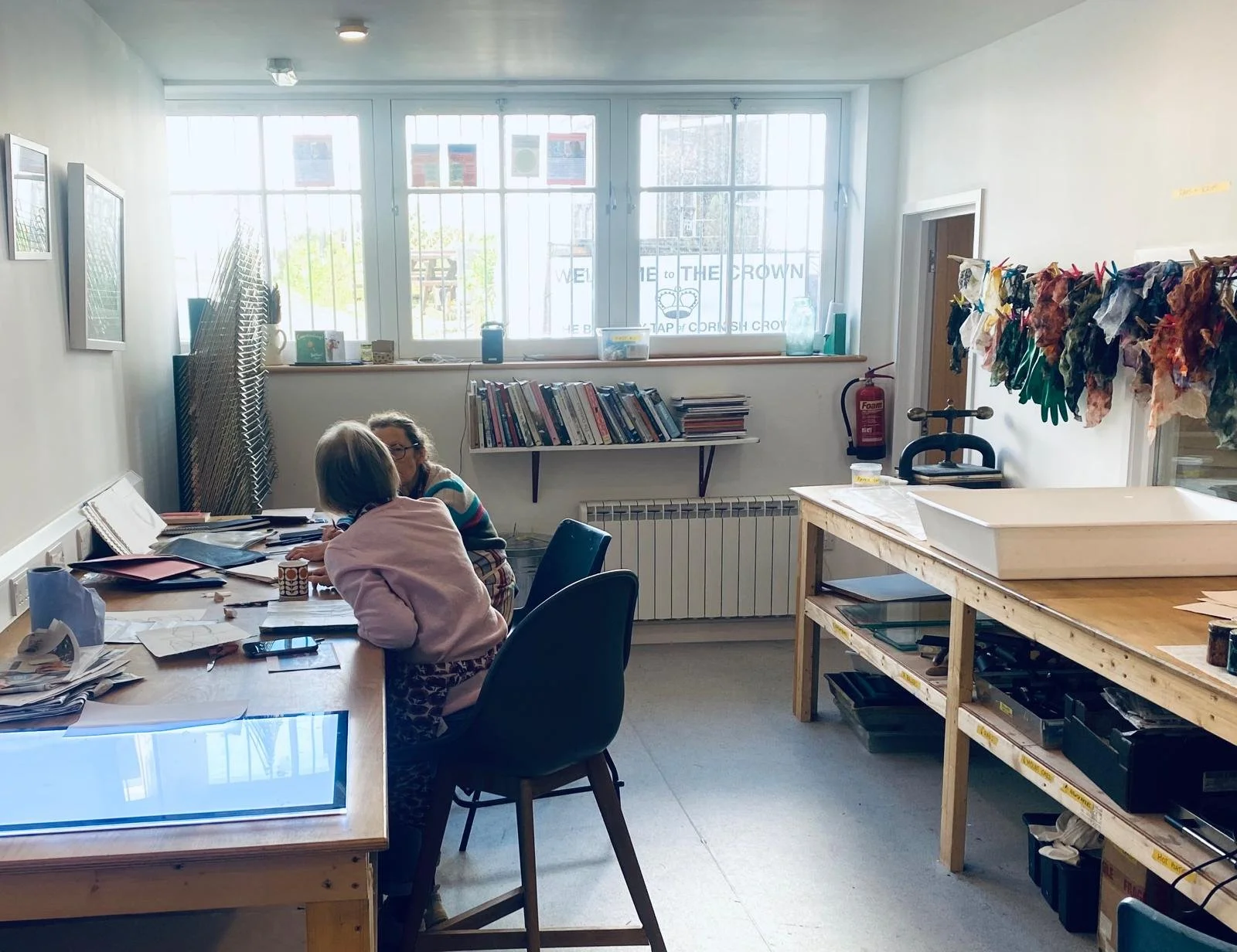
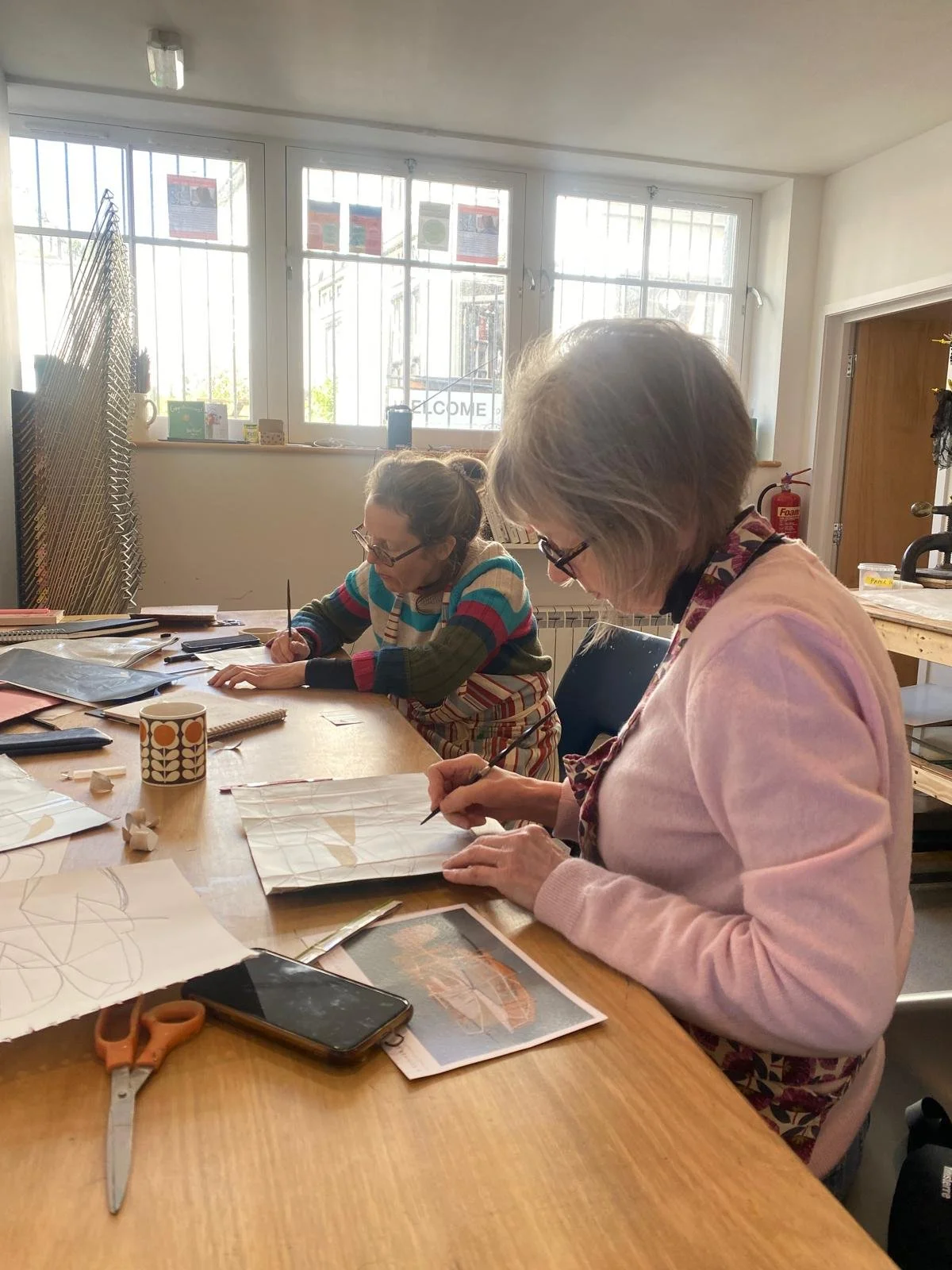
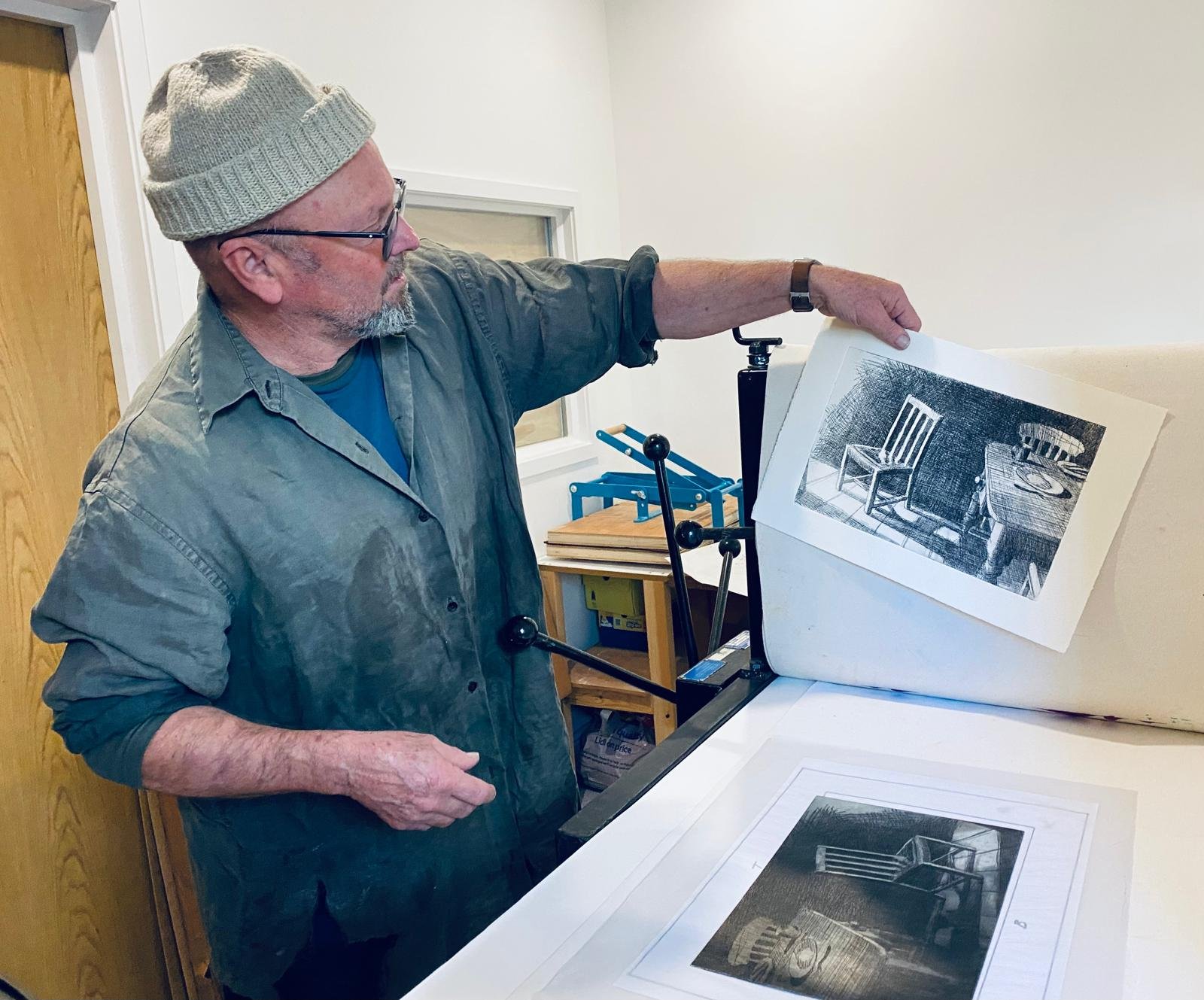
Drypoint
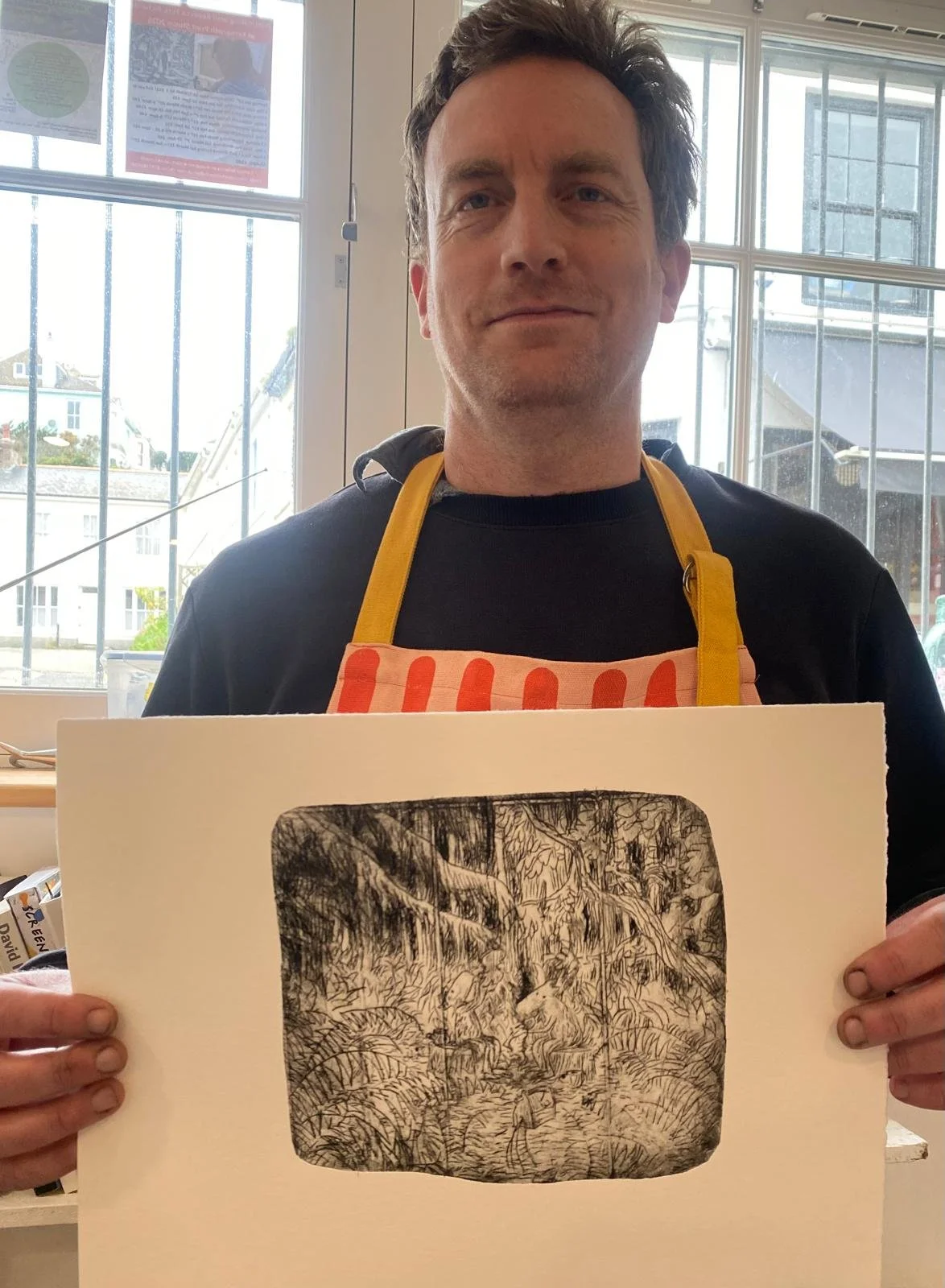
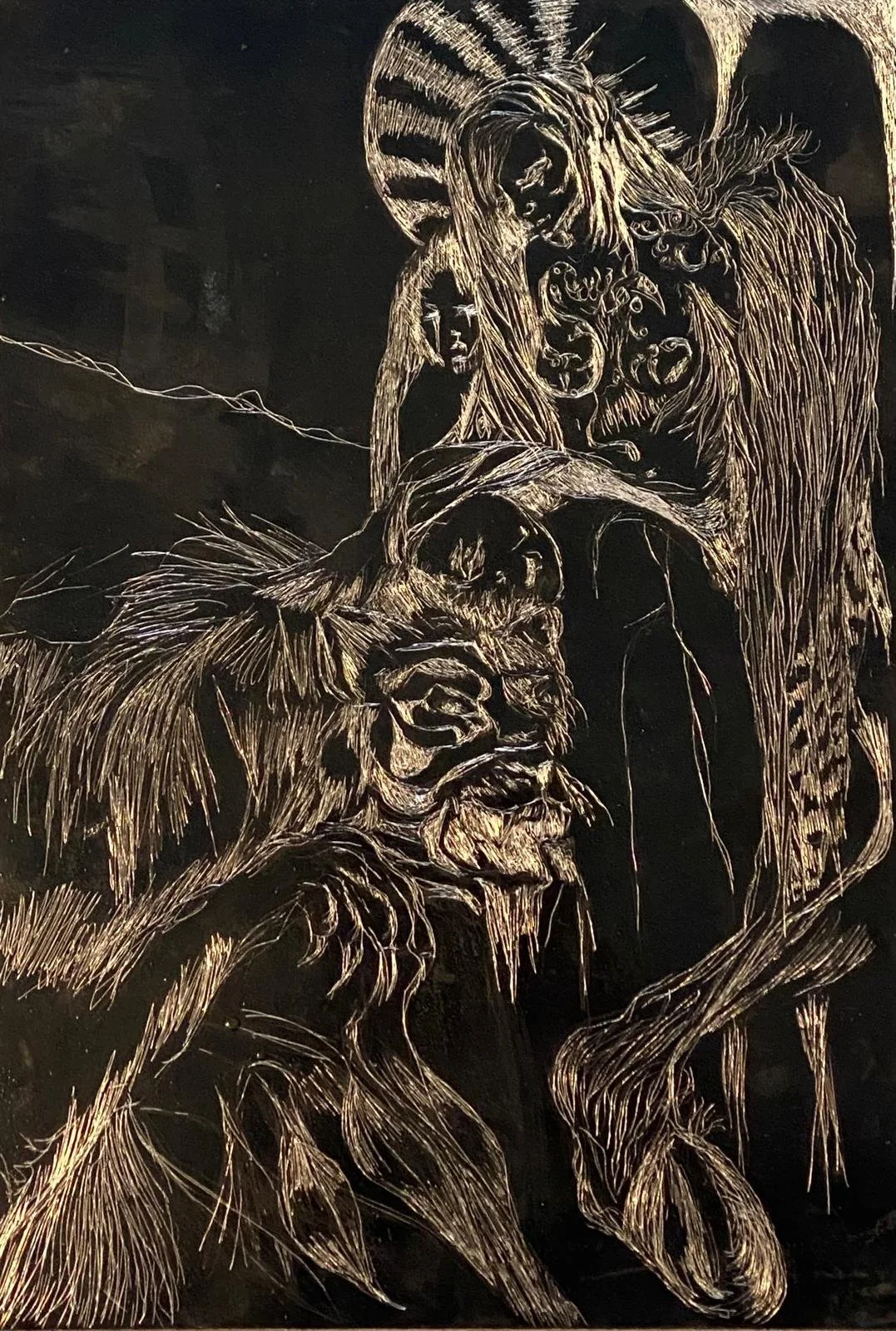
Drypoint is the most direct form of the etching techniques. Unlike traditional etching, which used acid to form lines in a metal plate, Drypoint relies on physical force. This technique is favoured by those who enjoy traditional drawing techniques
You will draw your design onto a plastic plate using a sharp etching needle, this forces the material up along the line creating a burr or groove.
These burrs are filled and hold the ink, which are then wiped carefully so as to give the desired depth of tone.
The plexiglass plate is then placed in the press and the design is forced onto the paper.
Tetrapak
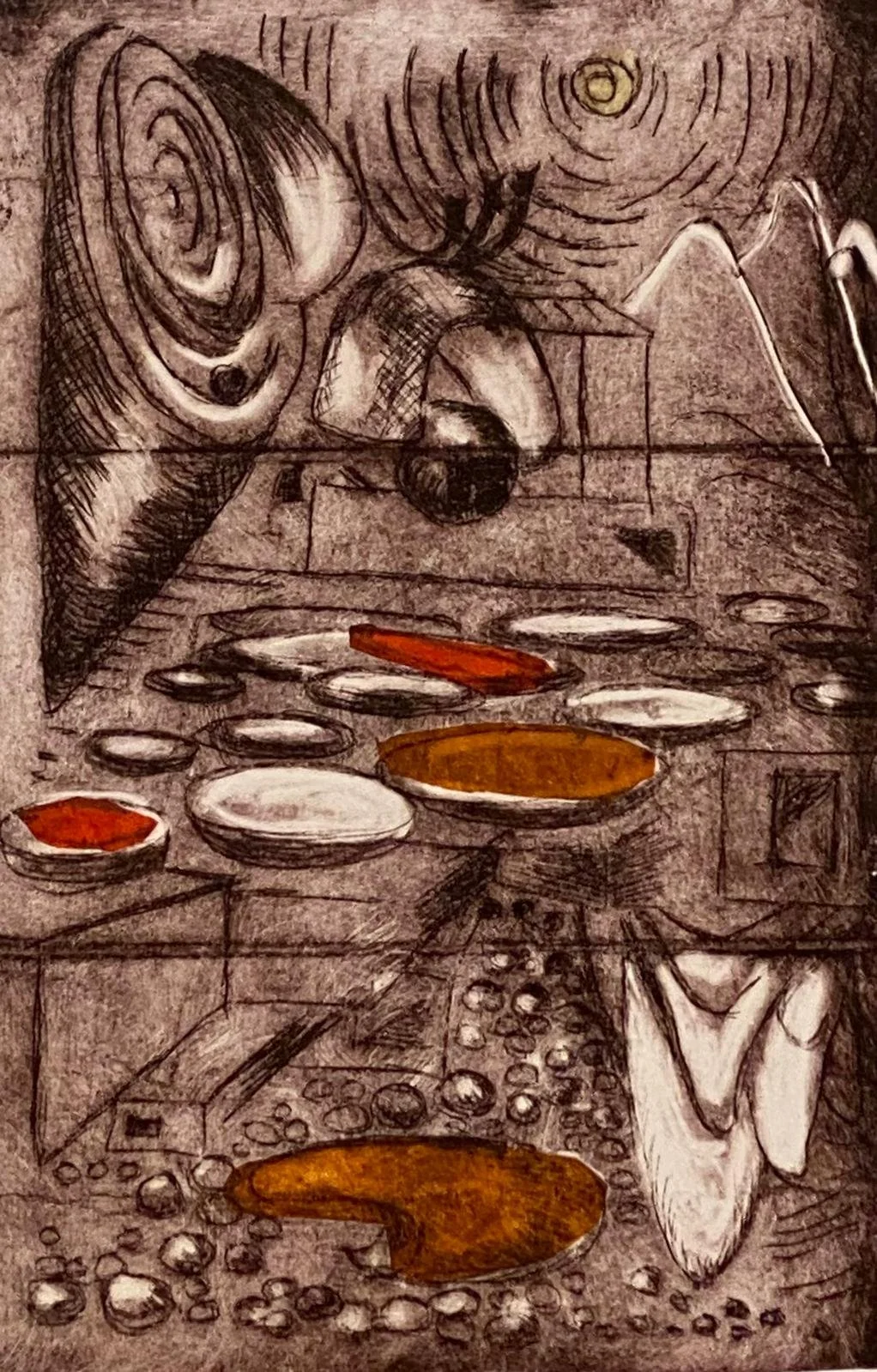
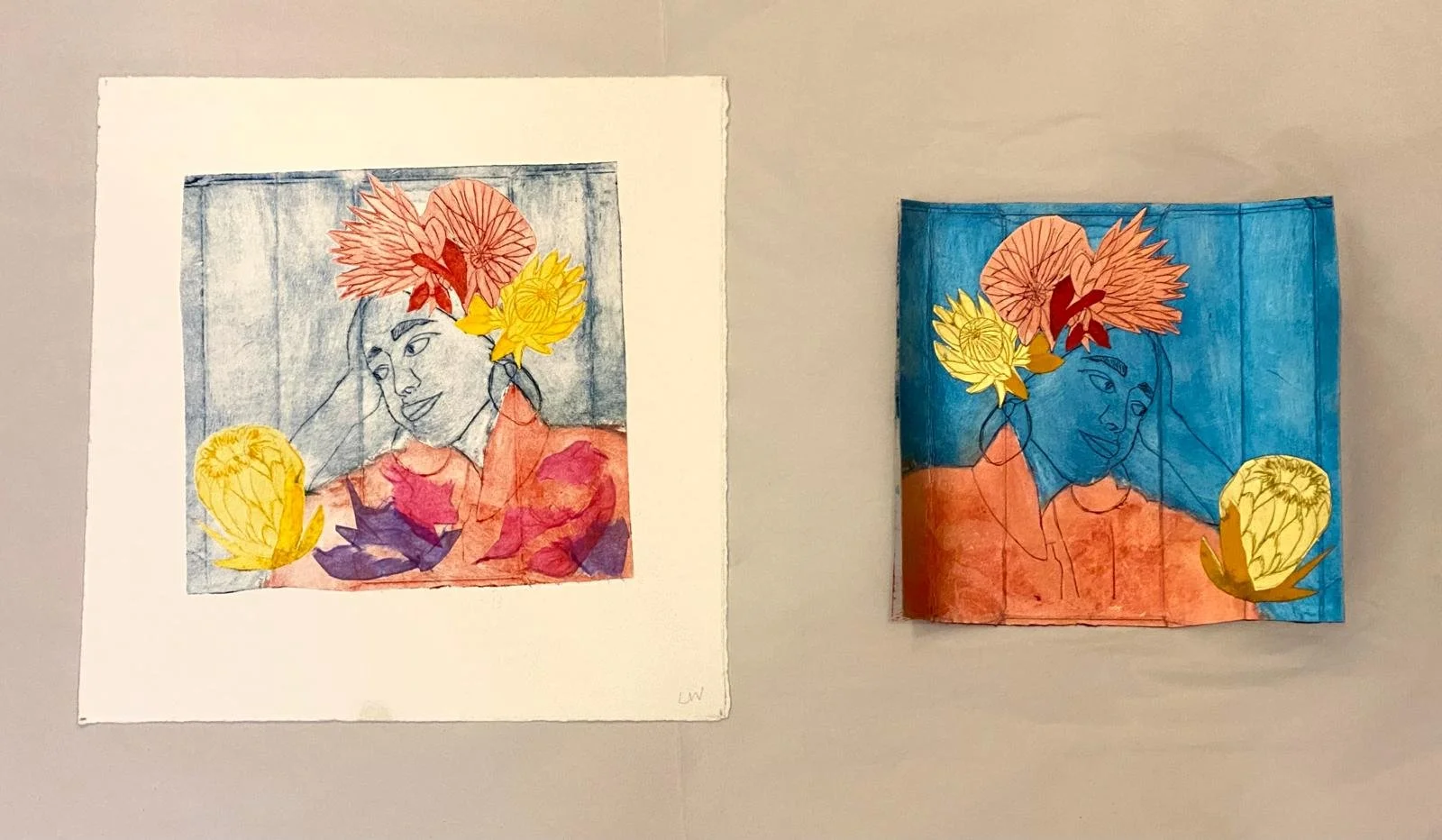
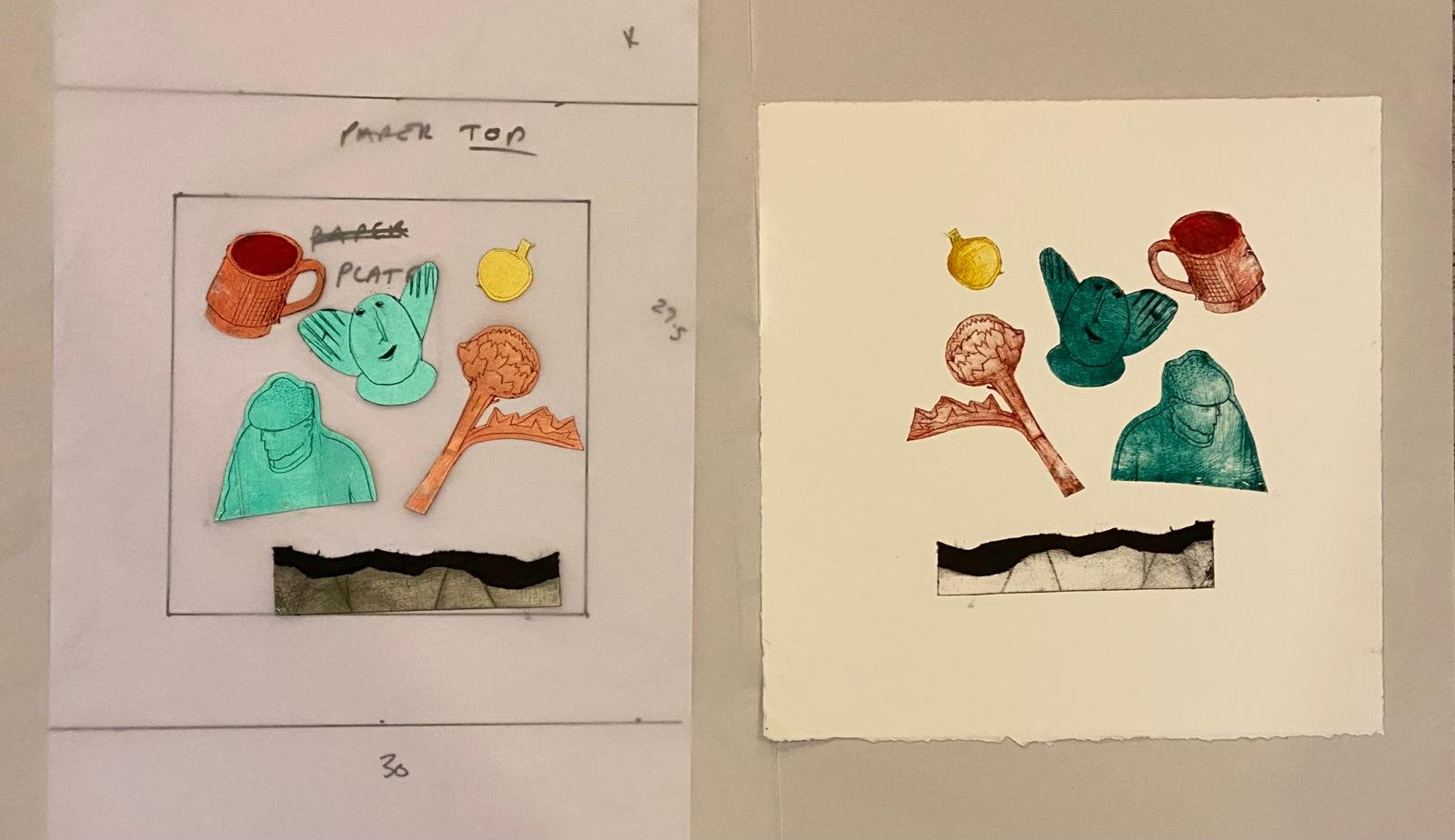
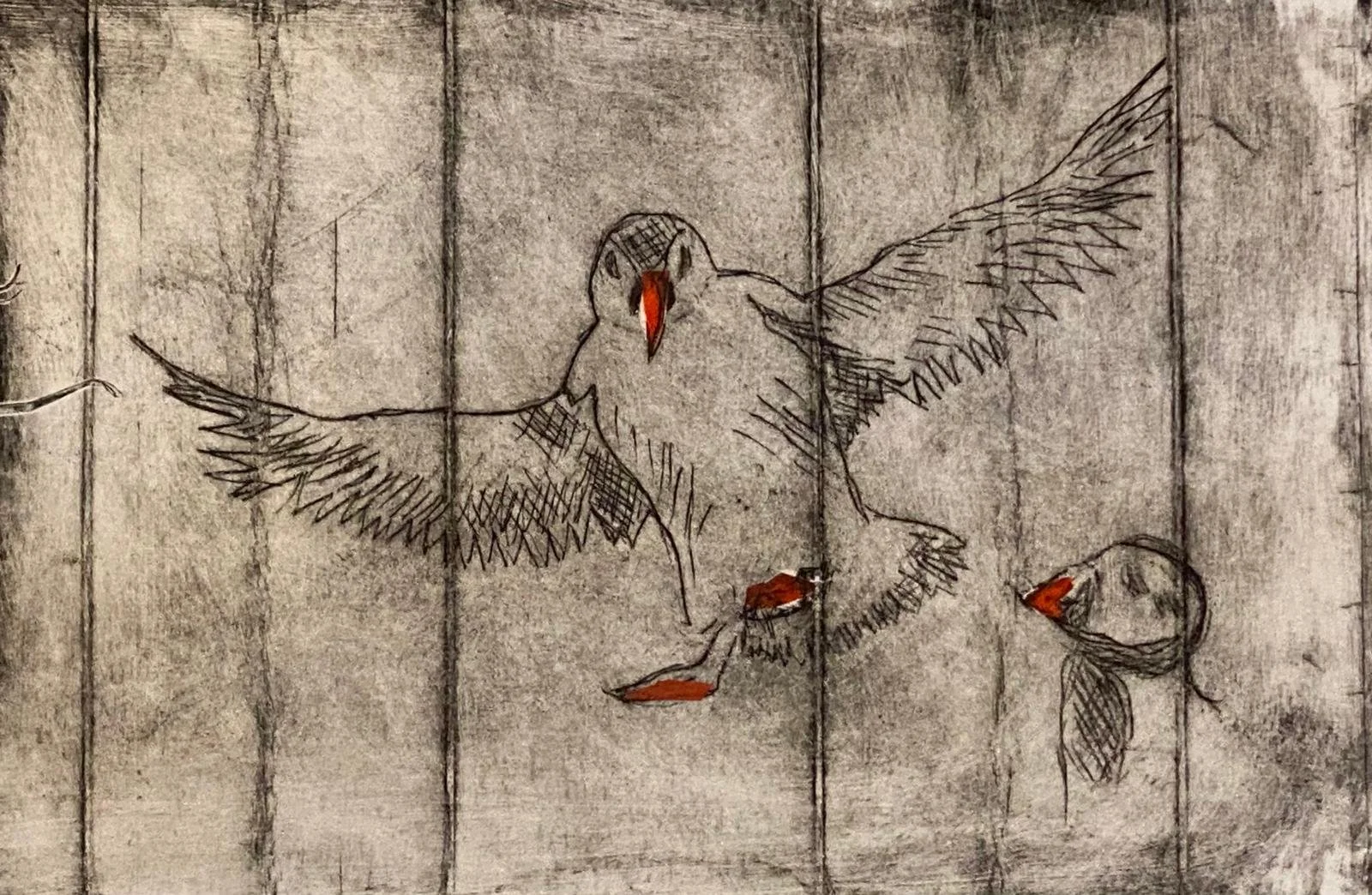
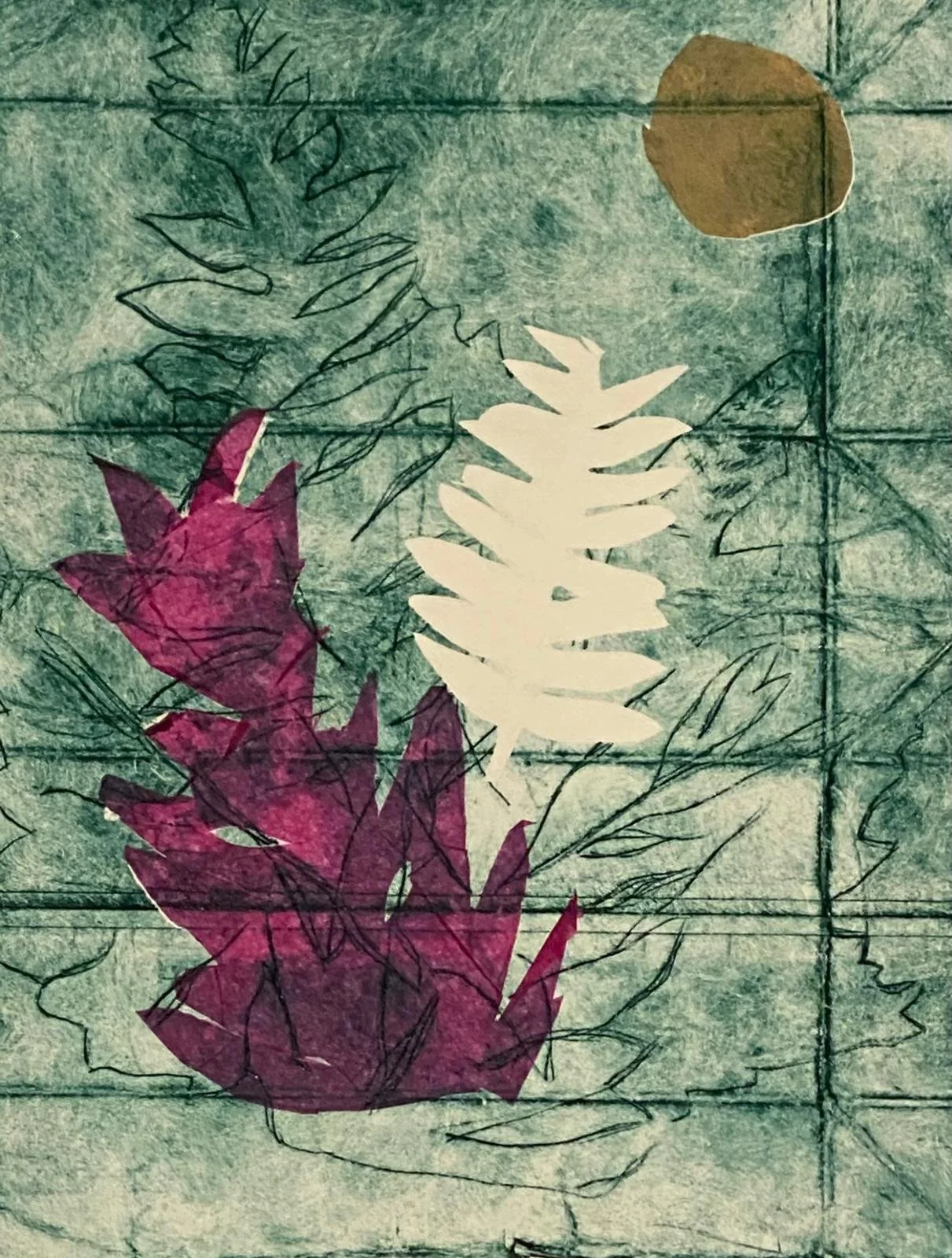
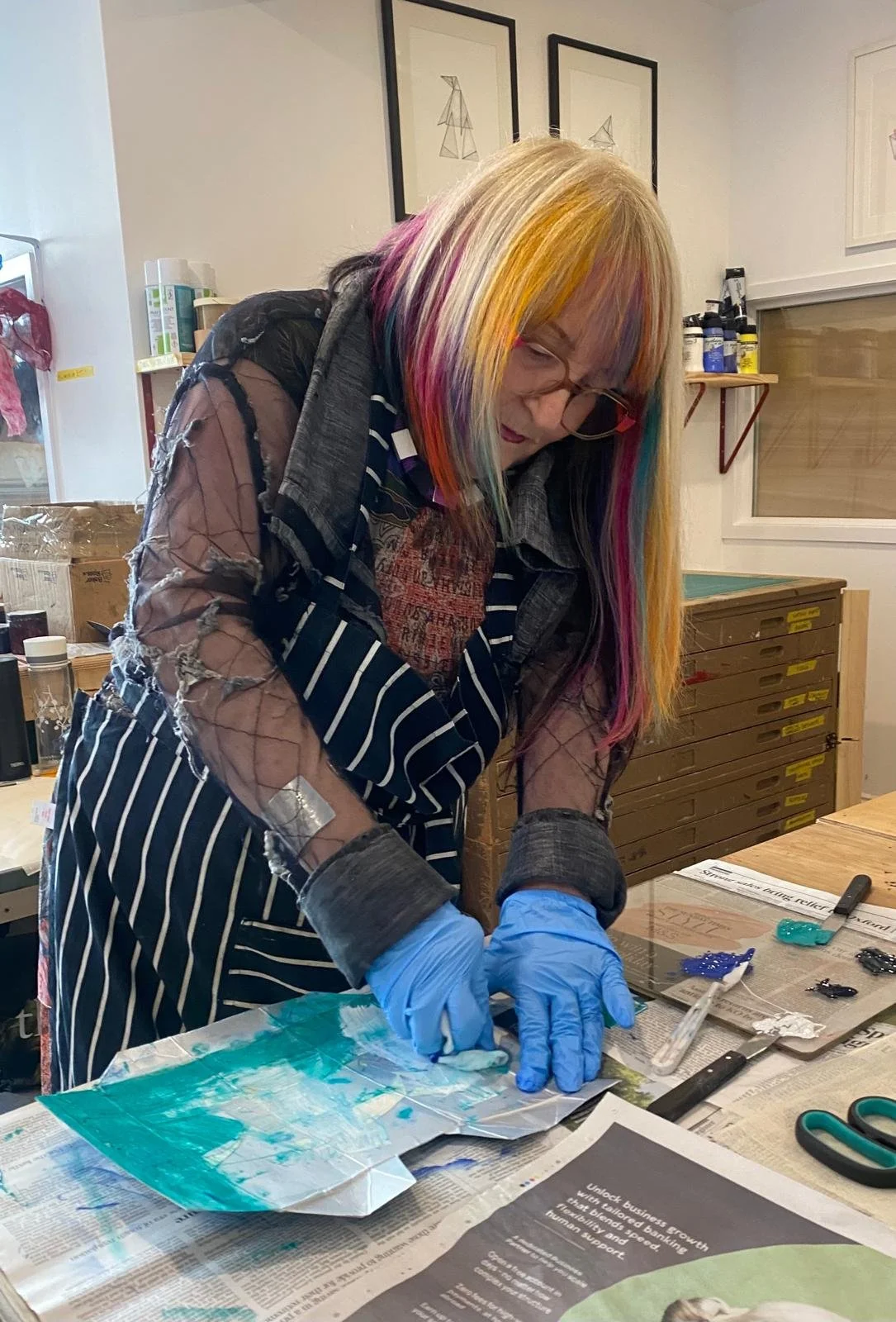
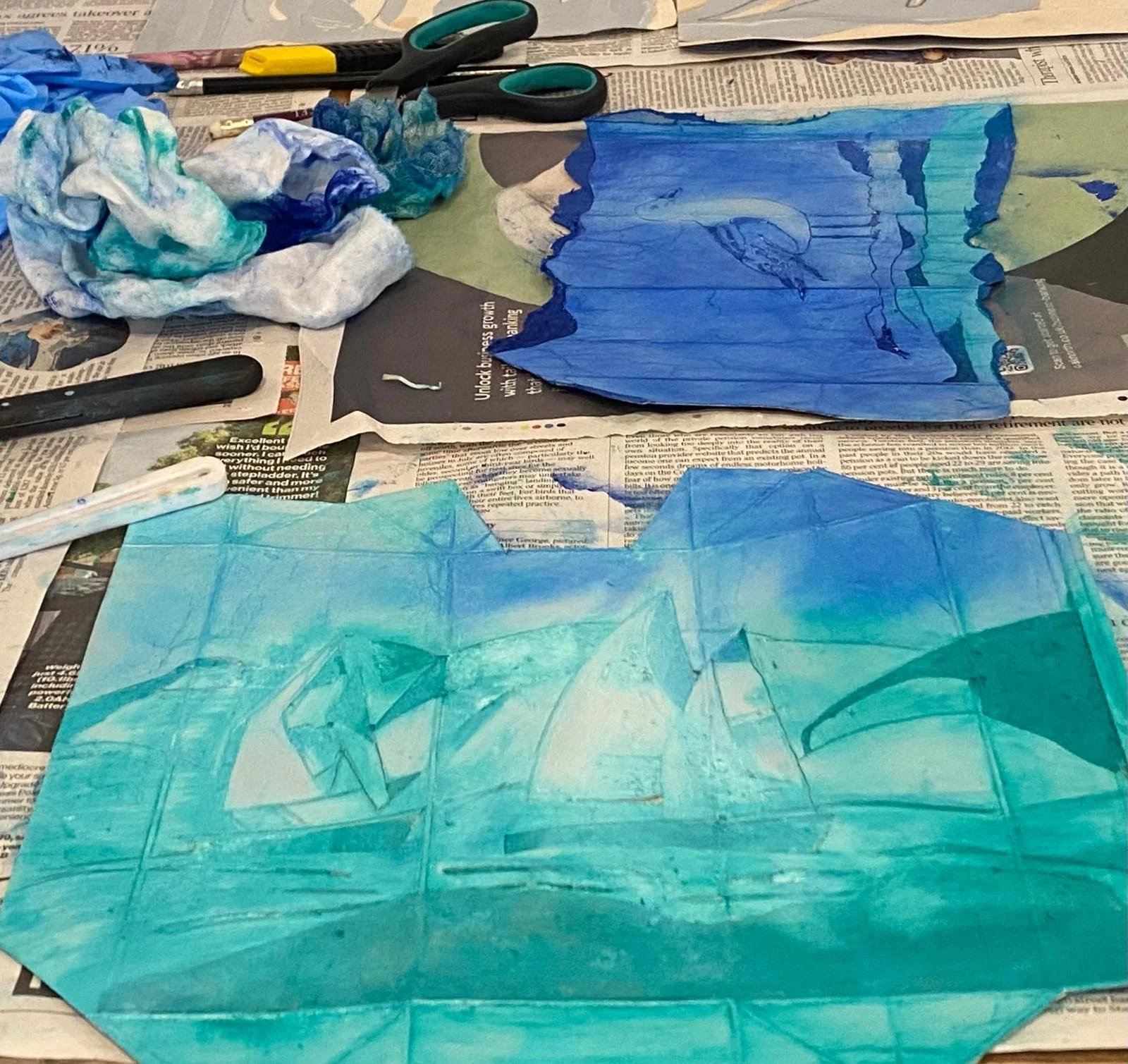
Tetrapak etching is a purely mechanical process. Using the fascinating medium of Tetrapak containers. You will use the inside of a cleaned and flattened Tetrapak carton which are provided.
Using an etching needle or Drypoint tool, you carve your design into the surface, this creates a groove/burr that will hold the ink
An oil based ink us applied to the entire surface and then wiped away. The remaining ink is held in the carved lines.
The TetraPak is then placed on the press and the pressure applied forces the paper into the grooves, this process transfers your image to paper
Tetrapak is a great medium to work with, it is an ideal entry point for students new to printing, whilst also eliminating the need for acids and chemicals. As Tetrapak itself is a “soft” medium, this allows students new to printing to create exciting designs quickly.
Monoprinting
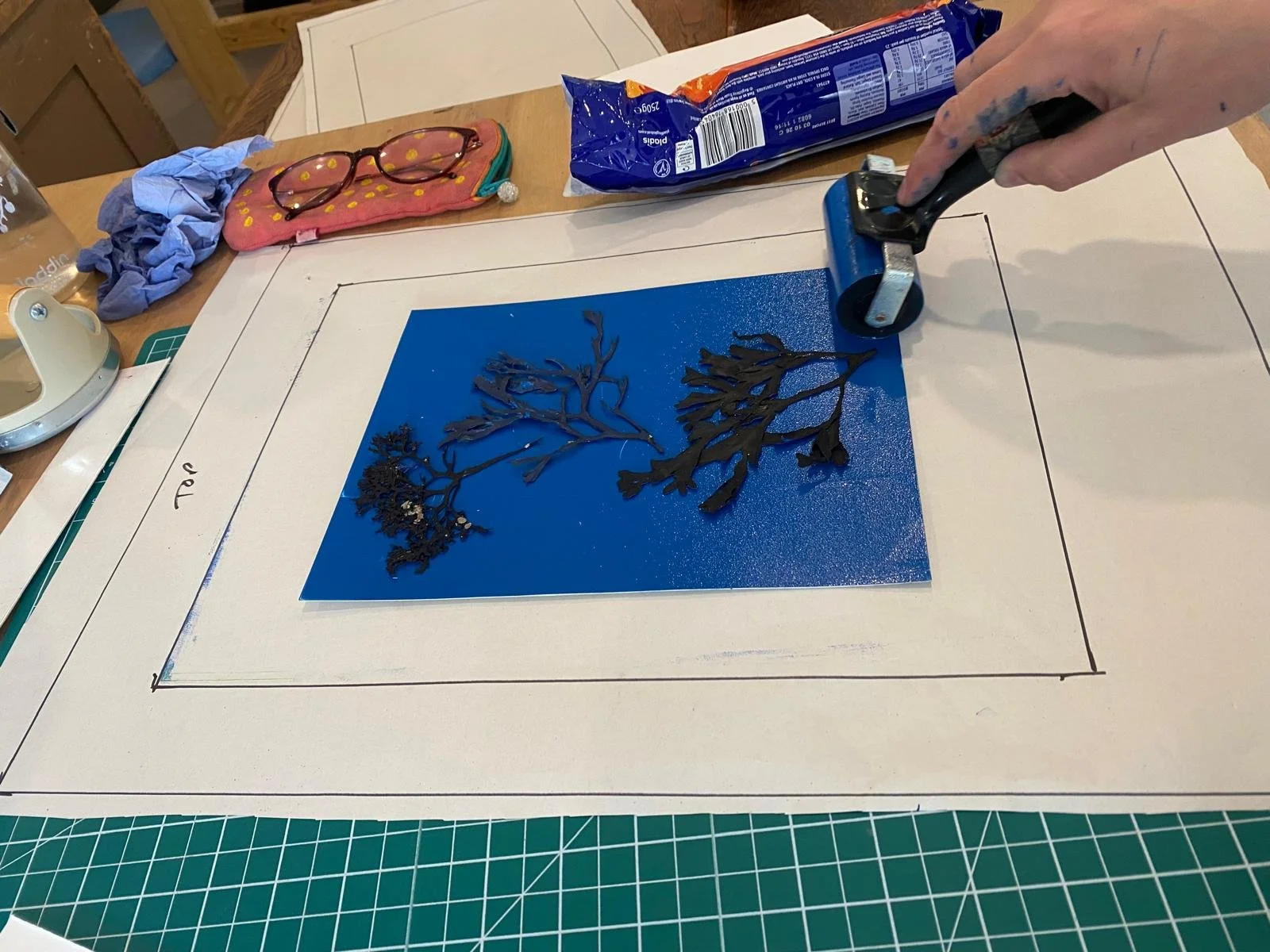
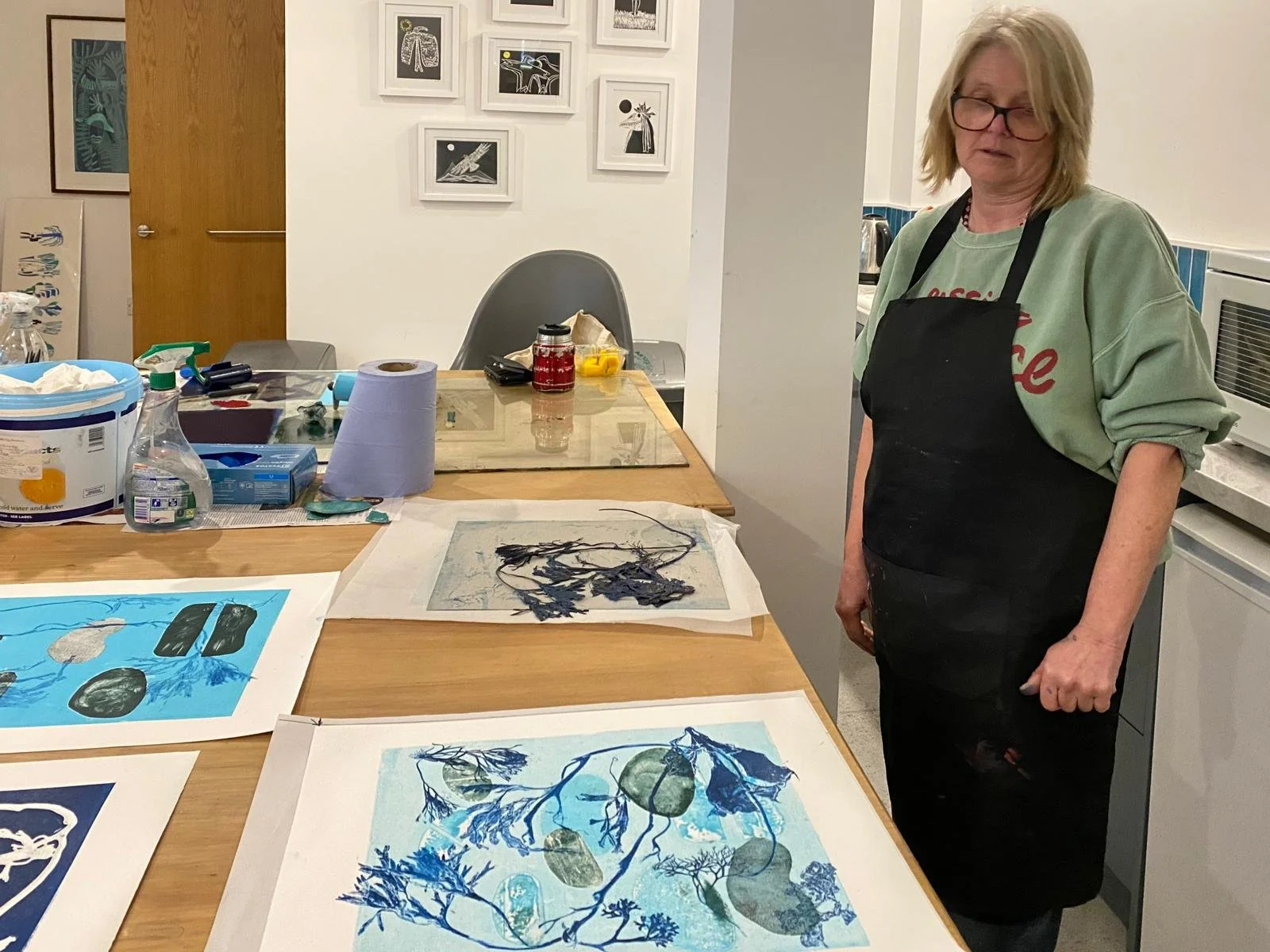
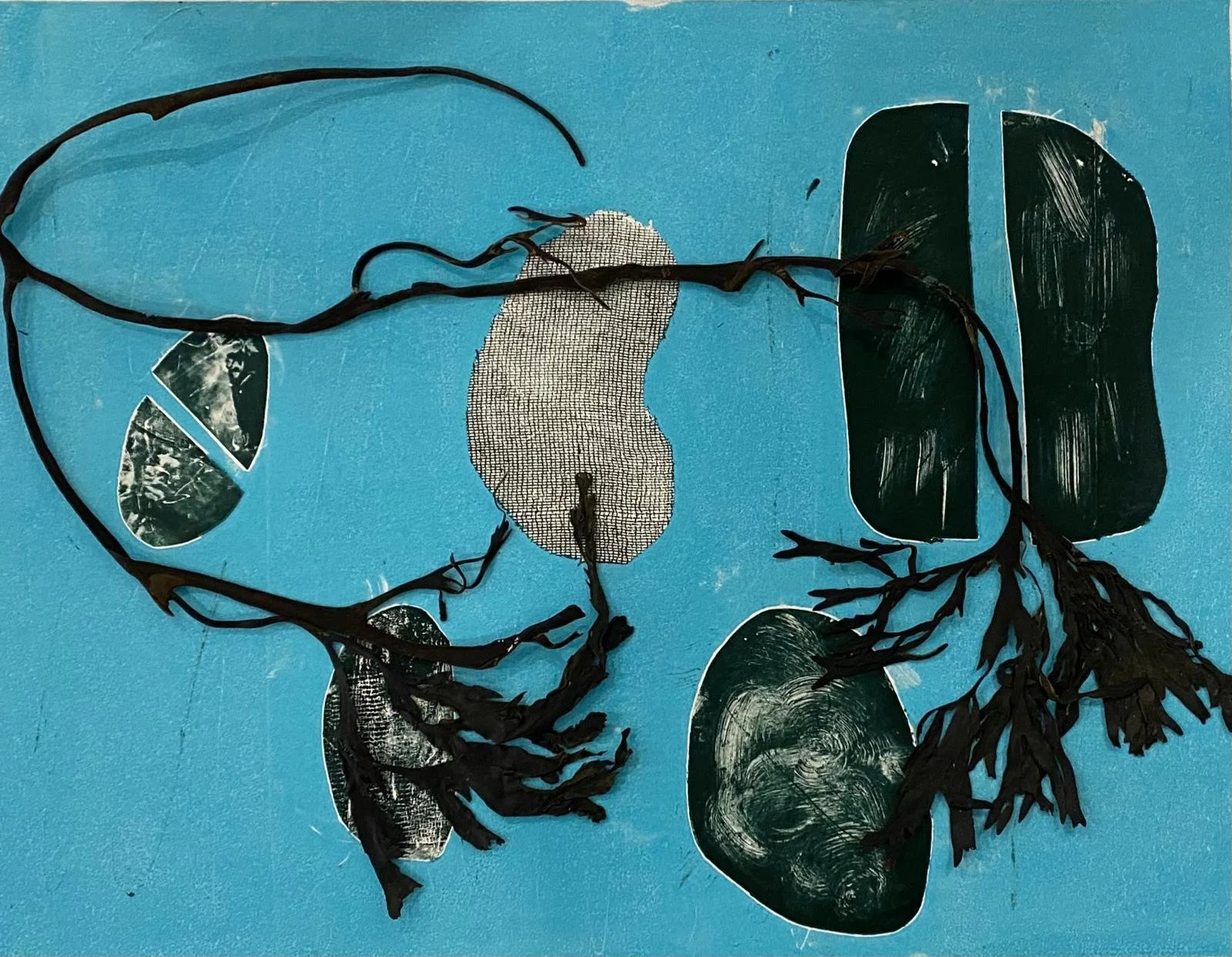
Monoprinting is a printing process that creates one off prints. Even using the same stamp you will not get an identical image.
This is the core concept of Monoprinting, that you will be creating a unique impression.
Additive method: You will paint or roll ink directly onto the plate
Subtractive method: The plate is covered entirely ink and you will be then remove ink and use the negative space
Tracing: Paper is placed over an inked plate and you will then trace the design , this removes ink along the lines.
The beauty of monoprinting is that a combination and variation of these techniques can be used to create your designs. You can utilise found objects, such as feathers, leaves, seaweed etc to get a direct impression by placing them on an inked surface!
Linocut
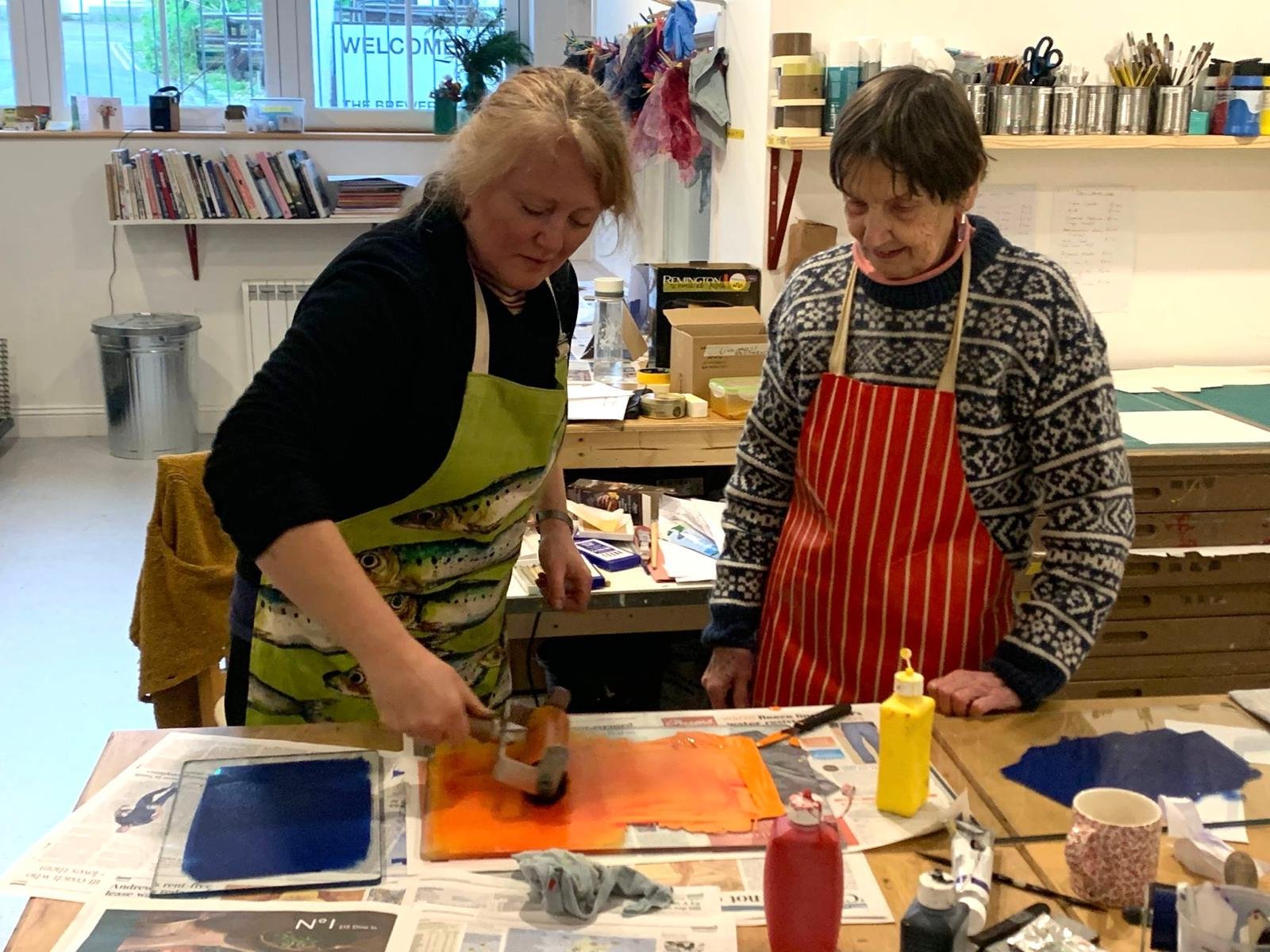
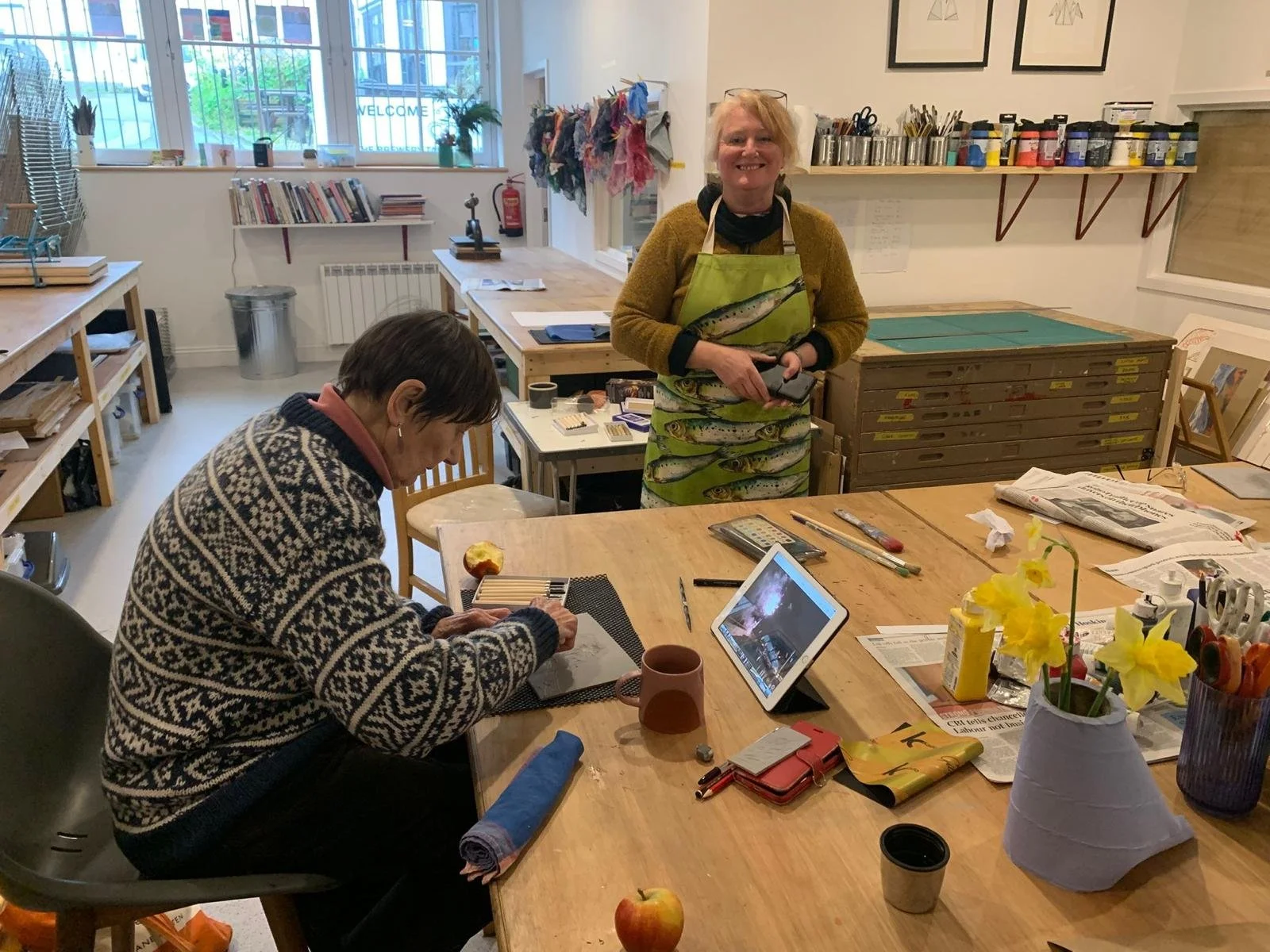
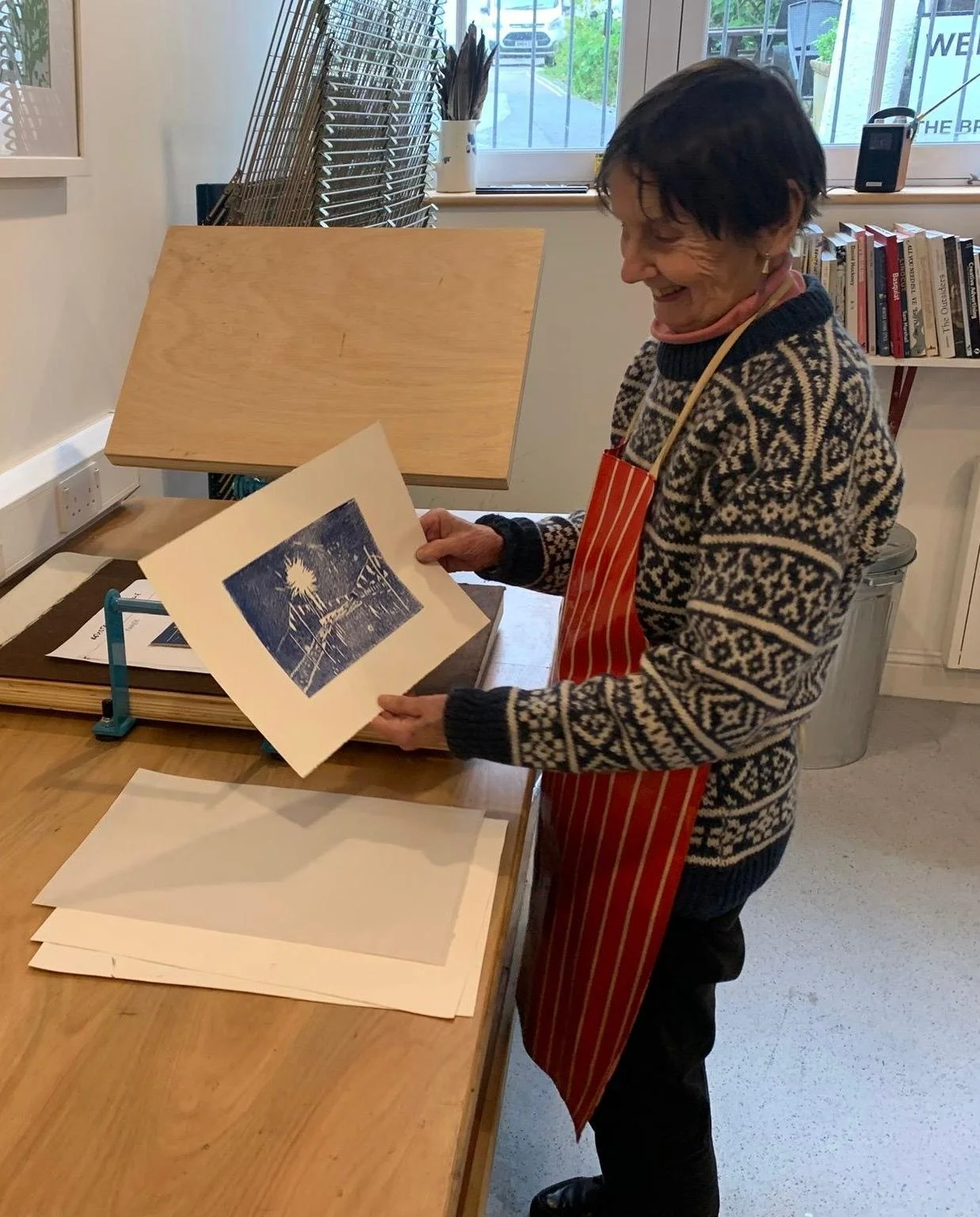
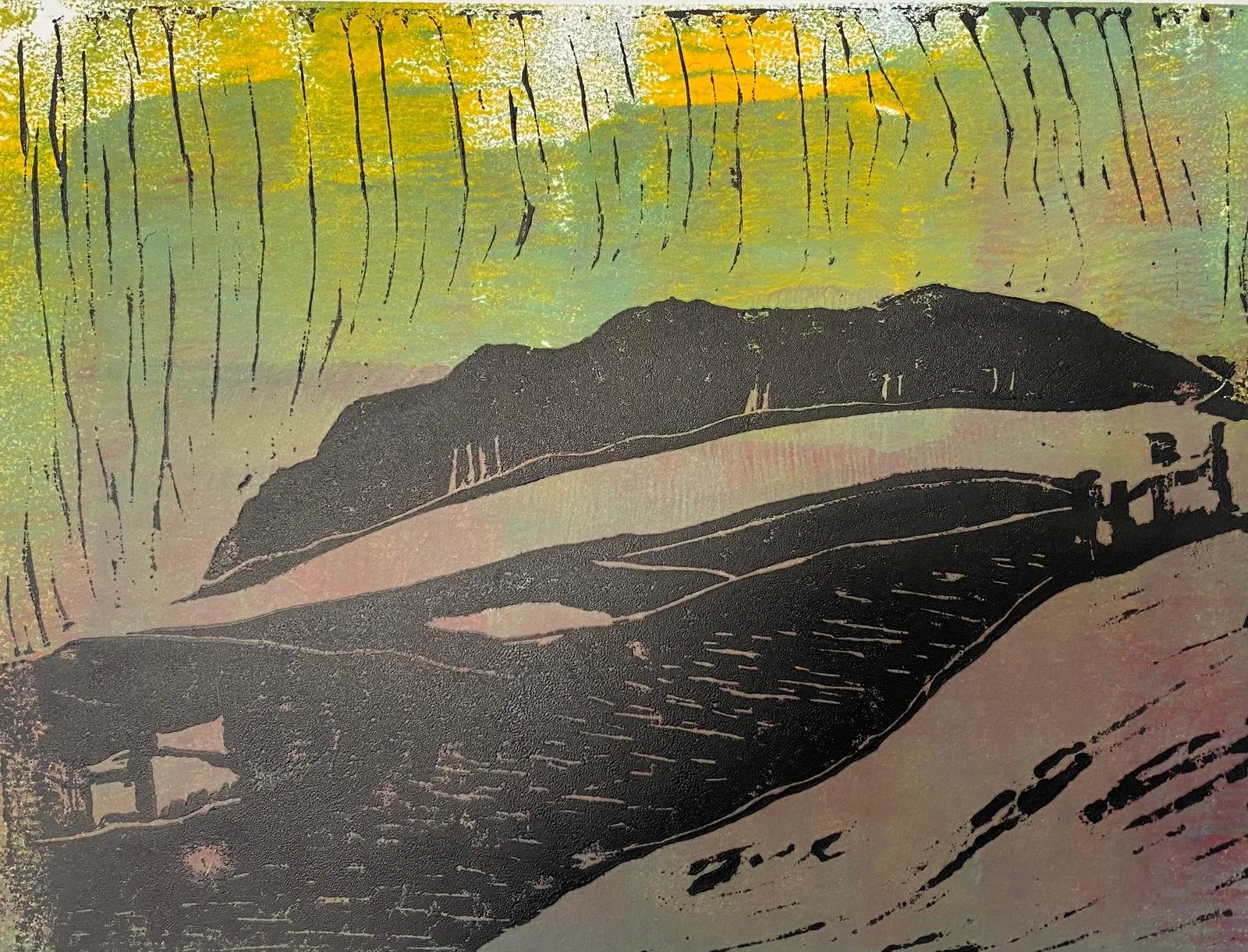
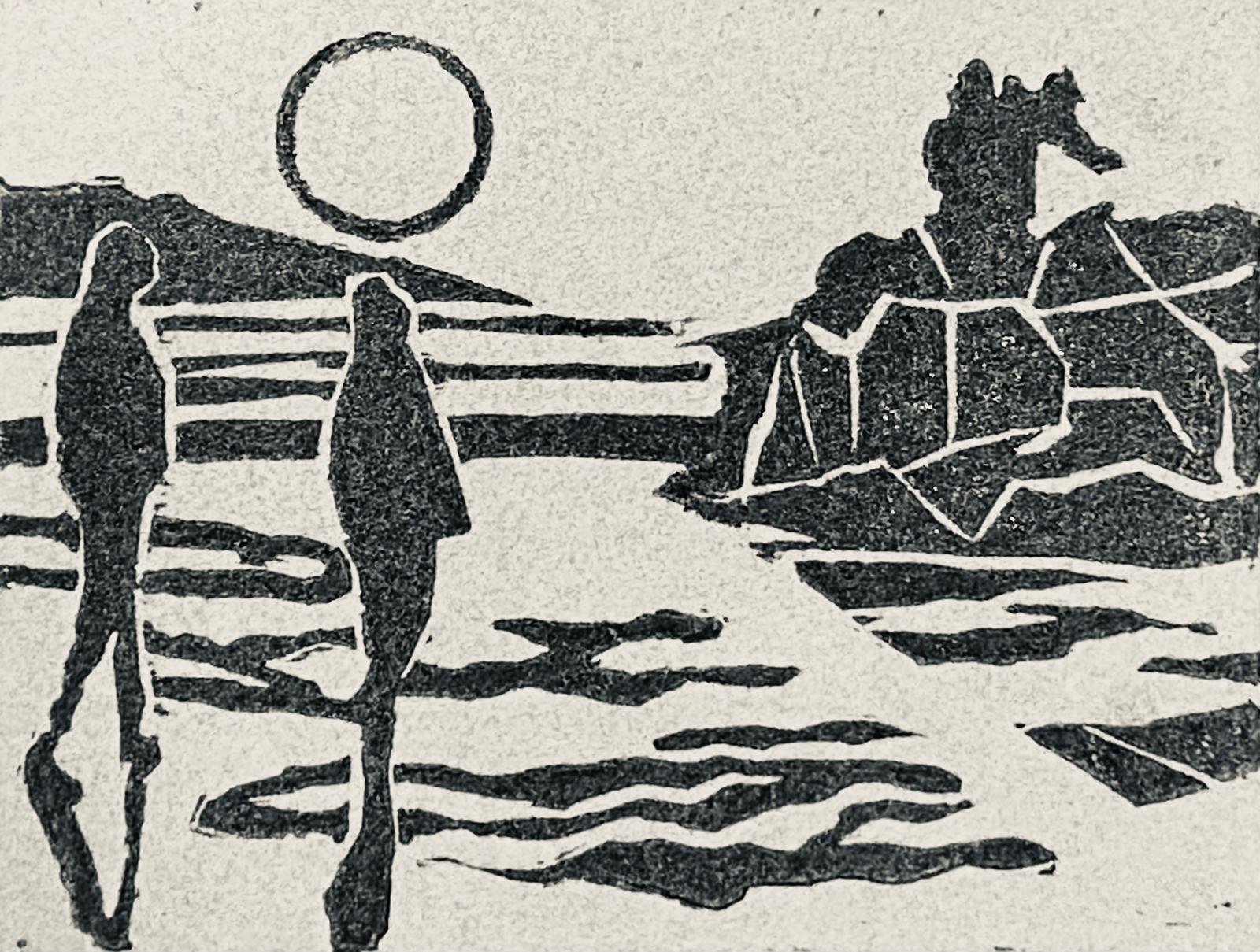
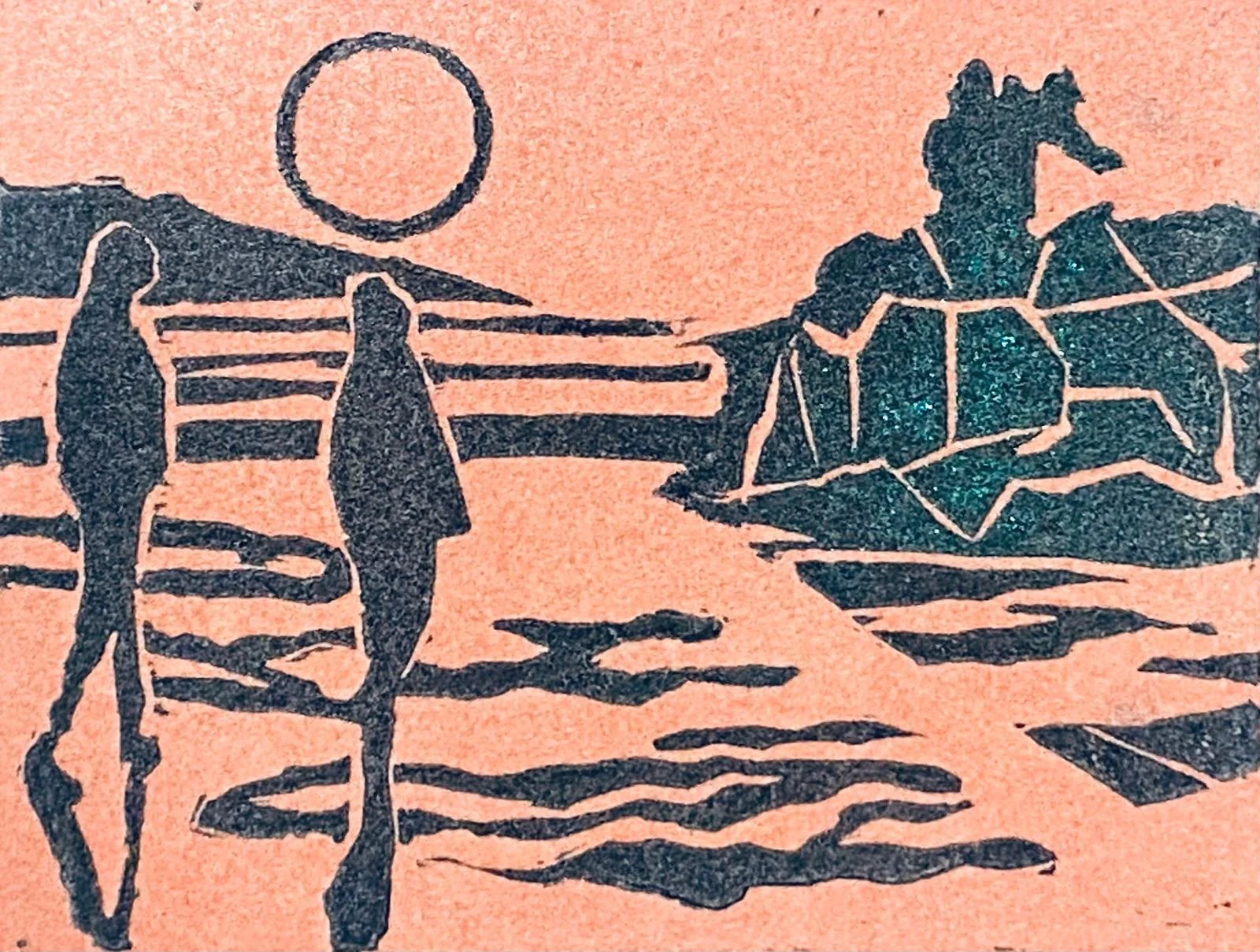
Linocut is a relief printing technique, that uses a sheet of linoleum as the printing plate.
You will use a tool to create gouges and cut away portions of the linoleum sheet, the areas that are left untouched will carry the ink
An even layer of ink is applied using an ink roller, the block is then pressed onto paper using a press. You can also print by hand using a hand baren.
Why Linocut is popular! It is an immediate technique, once you have gouged your design, you can print directly from it by hand or using a press.